
Sanctions and AML false positives explained: how a wrong match happens
Published: Last reviewed: Editorial policy
A sanctions or AML false positive is an alert that wrongly links you, or your wallet, to a sanctioned person or a risky source. It usually comes from a similar name, a shared date of birth, or an address that touched a flagged service. A reviewer compares your identity data with the listed entry. If they differ, you can ask for the match to be cleared. We do not help anyone evade genuine sanctions.
Questions about your case? Message us:
What a false positive actually is
Banks, exchanges and card providers run software that compares customers and transactions against sanctions lists and risk rules. The software errs on the side of raising an alert, because missing a real match is costly for the company.
Most alerts are cleared by a human reviewer. A false positive is an alert that turns out not to concern you. Your account may still be restricted while the review runs, which is why it feels like an accusation even though it is a routine step.
How a wrong name or address match happens
Several ordinary causes produce wrong matches. They are common and say nothing about you personally.
- A similar or identical name: common names and different spellings of the same name across alphabets can match a listed person.
- Overlapping details: the same birth year, a nationality or a city can raise the score even when the person is different.
- Transliteration differences: one name written several ways can create duplicates or near matches.
- Address exposure: your wallet received funds from an address that analytics tools link to a sanctioned or risky service, even when you knew nothing about it.
- Stale data: a list entry or a cluster label that changed, but the screening tool still shows the older result.
How to tell a false positive from a true match
The test is simple in principle. Compare your identity data with the listed entry: full name, date of birth, place of birth, nationality and any identifiers. If several of these differ, the match is weak.
For addresses, ask a different question. Did your funds actually come from or go to the flagged service, and how many steps away was it? A direct link is a harder problem than a link that is four or five hops removed.
Be honest with yourself about the facts. If you are in fact the listed person, or you knowingly dealt with a sanctioned party, this guide does not apply and no one can lawfully help you get around it.
How to challenge a flag
A challenge is strongest when it is short, factual and tied to the evidence. Reviewers are checking a list, not weighing your feelings about the delay.
- Ask the company, in writing, which check raised the alert and what it needs from you.
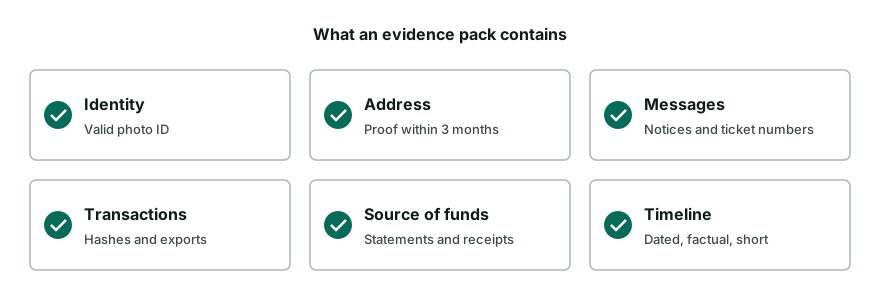
- Provide a clear copy of your identity document and, if relevant, proof of address and place of birth.
- Explain in a few sentences why the data differs from the listed entry, and attach proof.
- For a wallet flag, supply a transaction history and the documents that show where the funds came from.
- Keep the ticket reference and send everything through the official channel only.
What we do and what we do not do
We help people with a wrong match to organise the evidence and write a clear challenge. Independent specialists review the transaction trail and, where needed, independent licensed lawyers advise on the legal route.
We do not help anyone avoid genuine sanctions, hide a true match or move funds around a restriction. We also cannot force a company to clear a flag, and we never ask for your seed phrase, private keys or passwords.
Common questions
Does a sanctions alert mean I am on a sanctions list?
No. An alert means the software found a possible similarity. A reviewer then checks it. Many alerts are cleared once the company confirms that your name, date of birth and other data do not match the listed entry.
How long does a sanctions review take?
It depends on the company and the complexity of the match. Simple name matches can clear quickly after documents are supplied. Cases that involve an address history or a regulator request can take much longer.
Can I withdraw funds while the alert is open?
Usually not. Companies tend to hold withdrawals until the review is complete. Ask what options exist, for example returning funds to the original source, and do not try to move them elsewhere in the meantime.
Can you remove me from a sanctions list?
No. We cannot remove anyone from a list. We help you show a company that a match does not concern you. Removal from an official list is a separate legal process and needs a lawyer in the relevant jurisdiction.
How we can help
- Sanctions and AML false positive support. Wrong sanctions or AML match: evidence pack and a lawyer-filed statement to remove the flag.
- Source of funds and source of wealth packs. Build a clear source of funds and source of wealth pack for exchanges, banks and processors.
- Wallet screening and risk flag disputes. High-risk address flag from screening tools: document the path of funds and challenge it.
- Crypto freeze diagnosis. Work out who froze your funds and what can realistically be done next.
Information on this page is general and not legal advice.