
Exchange closed your account or told you to withdraw: how to get your funds out
Published: Last reviewed: Editorial policy
When a platform closes your account, it normally has to let you remove your assets unless a legal or compliance hold applies. Trouble starts when the closure notice and the withdrawal block arrive together. The practical route is to ask in writing for the closure reason, the withdrawal option and a deadline, keep every reply, and escalate through formal channels. We help you prepare each step. We cannot force a platform to pay out.
Questions about your case? Message us:
This is for you if
- You received an offboarding or closure notice and withdrawals are still disabled
- The platform says your account is closed but will not say where your balance is
- You were told to withdraw by a date and the withdrawal button fails or is limited
- Support answers only with a template and never states a reason or a next step
Typical situations
- Notice that the service is leaving your country and all users must withdraw
- Account closed after a compliance review, with a balance still inside
- Withdrawal allowed only to a bank account or wallet that you cannot use
- Closure notice with a short deadline and no way to log in
- Closed account where the platform says funds will be held until a review ends
- Offboarding of a business account after a change in the platform's risk policy
- Balance in a token that the platform delisted before it closed the account
What we do
- Read the closure notice and the terms
We go through the closure message, the account terms and the support history. We separate a plain offboarding, where you may withdraw, from a closure tied to a hold, where the platform may keep assets while a review is open.
- Draft a precise written request
We write a short, polite request that asks for the closure reason, the exact steps to withdraw, the supported destinations and a final date. A written answer gives you something to quote later, which a chat reply does not.
- Document the balance and the timeline
We help you export statements, screenshots and the dated messages that prove what was in the account and when the closure started. This record is the base for every later step.
- Solve the withdrawal obstacle
If the platform allows withdrawal but a technical or compliance step blocks it, we help you work out what is missing, such as a verification gap or an unsupported address, and answer it in the format the platform accepts.
- Escalate through formal channels
If the platform stays silent, we help you use its complaint procedure, then a regulator or ombudsman complaint where one exists, and an independent lawyer when the amount and the facts justify it.
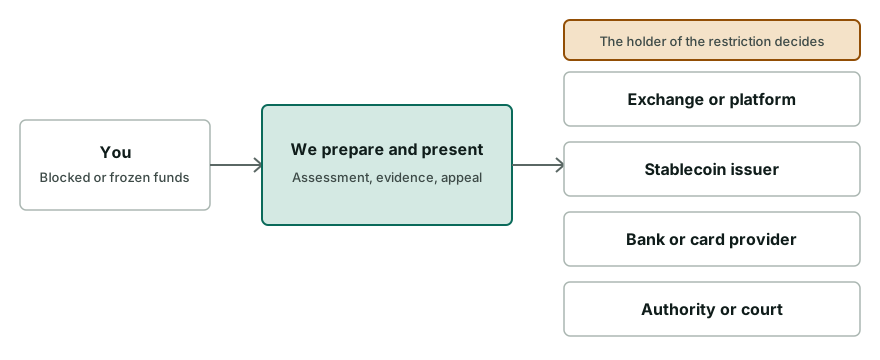
How the case runs
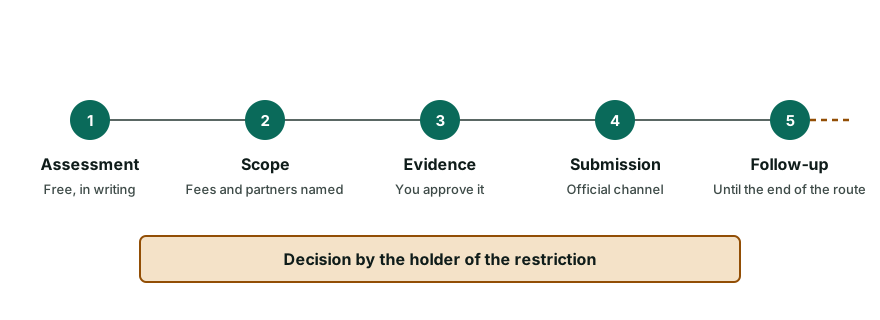
- Free assessment
Send us the closure notice and a short account of events. We reply in writing with what kind of closure this looks like, whether we can help and which documents we would need.
- Written scope
If we go ahead, we send the scope, the fee model and the independent specialists involved. You decide whether to proceed. Nothing is charged before this point.
- Evidence and records
You share statements, screenshots and messages through a secure channel. We check dates and amounts against each other and point out gaps before anything is sent.
- First formal request
We send the platform a clear written request for the reason, the withdrawal route and the deadline. You receive a copy and the ticket reference.
- Escalation and closure
We track the response, prepare the next-level complaint if needed and tell you plainly if the remaining options are limited or uncertain.
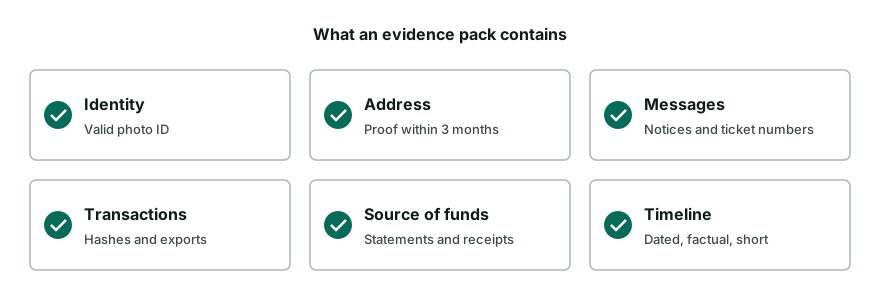
What to prepare
- The closure or offboarding notice, with date and sender address
- All support tickets and chat transcripts about the closure
- Account statements or transaction exports showing the balance
- The platform's terms of service that applied when you opened the account
- Government photo ID and proof of address matching the account
- Wallet or bank details for the destination you want to use
- A short timeline of when the closure notice, the block and each reply happened
What we cannot do
- We cannot force a platform to release your balance. The platform decides within its own rules and the law that binds it.
- If a legal or compliance hold applies, the platform may be barred from paying out. We do not promise a date or a result.
- We do not help you move funds around a restriction or hide their origin.
- We will never ask for your seed phrase, private keys or account passwords.
How long it takes
Closure cases move at the pace of the platform's support and compliance teams. A plain offboarding can be quick, while a closure tied to a review can take weeks. We give an estimate after the assessment and revise it as replies arrive.
Fees
The assessment is free. After it you receive a written scope and fee model for your case. We do not ask for any fee before we have told you whether we can help. Fees →
Questions people ask
Can an exchange close my account while I still have funds in it?
Platforms can usually close accounts under their terms. In many places they must still give you a way to withdraw your assets, unless a legal or compliance hold applies. Check the notice and the terms, and ask in writing what applies to you.
What should I ask for in writing?
Ask for the reason for closure, whether a hold applies, the exact steps and destinations for withdrawal, the final deadline and a named channel for disputes. Request a reply in writing and keep the ticket number.
The platform told me to withdraw but the button does not work. What now?
Take dated screenshots of the error, write down what you tried and report it through the official ticket system. Then ask in writing for an alternative withdrawal route. A documented failure is much stronger than a verbal complaint.
Is a closed account the same as a frozen account?
Not always. A frozen account is restricted pending a review. A closed account has ended the relationship. The two can overlap, and when they do the platform may refuse payouts until the review closes.
Do I lose my funds if I miss the deadline in the notice?
Usually not at once, but the risk is real, so act early. Reply in writing before the date, state that you want to withdraw and ask for an extension. Assets are often held by the platform for a period afterwards.
Can I complain to a regulator?
Sometimes. It depends on where you live and whether the platform is licensed there. Some jurisdictions have a financial ombudsman or consumer body that accepts such complaints. We check which routes exist in your case.
Related situations
- Crypto freeze diagnosis. Work out who froze your funds and what can realistically be done next.
- Exchange account unblocking. Understand the freeze, prepare KYC/AML evidence, answer compliance and appeal.
- Source of funds and source of wealth packs. Build a clear source of funds and source of wealth pack for exchanges, banks and processors.
- Regulator complaints and ombudsman filings. Prepare a structured regulator, ombudsman or consumer complaint with a clear chronology.
Read next
Sources
Official or authoritative pages this page is based on. Pages change, so check the source for the current wording.
- Does Coinbase freeze accounts? · Coinbase
- Why is my account restricted? · Kraken
Information on this page is general and not legal advice.